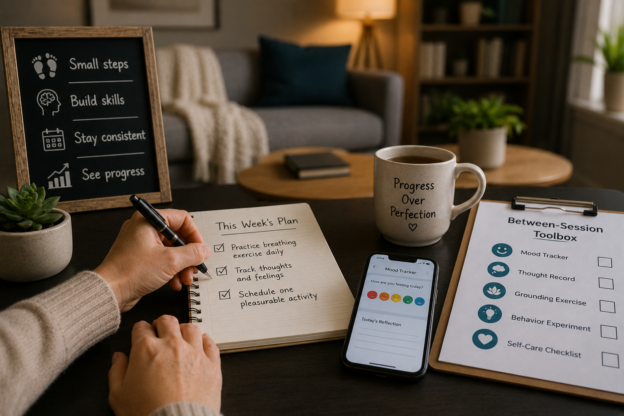
Keeping counseling clients engaged between sessions boosts progress, strengthens the therapeutic relationship, and helps clients apply what they learn in real life. Engagement between sessions doesn’t mean constant contact or homework overload. It means providing practical, respectful, evidence-informed tools and activities that fit each client’s needs and capacity. This guide gives clear, user-friendly strategies counselors can use to keep clients motivated, on track, and supported between meetings.
Why between-session engagement matters
- Reinforces learning: Skills practiced between sessions transfer into daily life, making therapy more effective.
- Increases retention and progress: Regular small steps maintain momentum and reduce dropouts.
- Strengthens agency: Clients who practice between sessions feel more in control and see tangible benefits.
- Allows real-world testing: Clients try interventions in the situations where they need change most, giving useful material for the next session.
Principles to guide what you ask clients to do
- Keep it brief and specific. Short, achievable tasks are more likely to be completed.
- Collaborate. Co-create tasks with clients so they feel ownership.
- Tailor to the client’s life. Consider routines, energy, literacy, and access to technology.
- Make it skill-building not busywork. Every between-session activity should teach or strengthen a clear therapeutic skill.
- Normalize variability. Track progress without shaming missed practice; use lapses as data for problem solving.
- Use technology wisely. Digital tools can help, but only when matched to client preference and privacy needs.
Practical strategies to increase engagement
- Collaborative, micro-goals
- What to do: At the end of a session, set one or two micro-goals: small, measurable actions the client can realistically do before the next meeting.
- Examples: “Try one breathing exercise when you feel stressed” or “Write down three observations of a trigger this week.”
- Why it works: Micro-goals lower activation energy and create quick wins that build confidence.
- Brief, personalized homework
- What to do: Give short, tailored exercises tied directly to session content.
- Examples: Thought records with just one entry per day; a 5-minute exposure step; a short behavioral activation checklist.
- How to structure: Limit to 1–3 items. Include clear instructions, estimated time, and rationale.
- Track completion: Use simple scoring (e.g., 0–2 scale) to learn what works and adjust.
- Between-session worksheets and templates
- What to do: Provide ready-to-use worksheets for common skills: mood logs, cognitive restructuring prompts, grounding scripts, or activity planners.
- Tips: Keep wording plain, use large fonts, and include examples. Offer digital and printable formats.
- How to use in session: Complete the first item together so the client understands the format.
- Brief audio or video tools
- What to do: Record 1–5 minute guided exercises (breathing, progressive muscle relaxation, short coping self-statements) or recommend short, reputable videos.
- Delivery options: Secure client portal, encrypted messaging, or email (with informed consent about privacy).
- Advantages: Clients can follow auditory guidance during stressful moments when reading is hard.
- Homework choice menus
- What to do: Present a menu of 4–6 options and let clients pick the ones they prefer.
- Why it works: Choice increases motivation and adherence.
- Example items: Practice a coping skill, track moods, try a behavioral activation task, practice a social interaction script.
- Use of technology and apps
- What to do: Recommend evidence-informed apps for mood tracking, meditation, CBT exercises, or DBT skills.
- Examples: mood trackers, breathing apps, habit trackers, guided journaling.
- Safety note: Screen for privacy, cost, and usability. Only suggest apps you’ve reviewed and match to client needs.
- Structured check-ins
- What to do: Agree on brief check-in methods—secure message, 1–2 question SMS, or a quick app update.
- Frequency: Typically 1–2 brief check-ins between sessions; keep boundaries clear.
- Content: Simple prompts like “What went well?” or “One barrier you faced?” Use responses to inform the next session.
- Boundary tip: Clarify that check-ins are for brief updates, not therapy between sessions unless specified in your practice policy.
- Behavior experiments and real-world practice
- What to do: Design experiments where clients test beliefs or skills in small, controlled ways.
- Example: For social anxiety—initiate one 3-minute conversation; for low mood—schedule one pleasurable activity.
- How to review: Analyze results collaboratively in the next session.
- Reinforcement and positive feedback
- What to do: Acknowledge small efforts and review progress each session.
- How: Use specific praise (e.g., “You completed three breathing practices this week—I noticed your wording about how it helped.”)
- Benefit: Reinforcement builds self-efficacy and encourages future attempts.
- Problem-solving missed practice
- What to do: If homework isn’t done, use nonjudgmental curiosity to explore barriers and collaboratively revise the plan.
- Helpful questions: “What got in the way?” “What needs to change to make this doable?” “What would be a realistic plan for next week?”
- Avoid: Punitive language or overemphasis on compliance.
- Use of reminders and habit cues
- What to do: Help clients set simple reminders (alarms, calendar events, sticky notes) and tie new practices to existing routines (habit stacking).
- Example: “Do three deep breaths after brushing your teeth” or “Check mood tracker with morning coffee.”
- Brief journaling prompts
- What to do: Offer single-question prompts that fit into busy days.
- Examples: “One thing that went well today,” “One thought that bothered you and evidence for/against it.”
- Time expectation: 1–5 minutes.
- Collaborative session-ending summaries
- What to do: End sessions with a short summary, 1–2 agreed tasks, and expected outcomes.
- Why it helps: Clients leave with clarity and a stronger chance of follow-through.
- Psychoeducation handouts
- What to do: Provide concise handouts that explain rationale behind techniques in plain language.
- Use: Reinforce why practices work and reduce stigma about struggles.
- Social support and accountability
- What to do: With consent, encourage clients to involve supportive friends or family for encouragement (not to replace therapy).
- Examples: A buddy for exercise, reminders from a partner, or collaborative problem-solving.
- Incentives and tracking progress visually
- What to do: Use simple tracking charts, progress bars, or habit streaks clients update.
- Benefit: Visual progress increases motivation and helps identify patterns.
- Crisis planning and boundaries
- What to do: Always include a plan for crises and clearly state the limits of between-session contact.
- Components: Emergency contact info, crisis hotline, what constitutes an urgent vs. non-urgent concern.
- Why: Keeps clients safe and clarifies expectations.
Practical examples of between-session plans (sample scripts)
- Anxiety-focused week
- Session close: Agree on a plan: try a 2-minute grounding exercise once daily, do one 5-minute exposure task, log anxiety before and after each exposure.
- Deliverable: Client brings one completed exposure log to next session.
- Depression-focused week
- Session close: Choose three brief activities from a pleasure/achievement menu; schedule one each day; fill a 3-item mood and activity tracker.
- Deliverable: Client brings tracker and notes one insight about barriers or triggers.
- Relationship work
- Session close: Practice one “I” statement this week in a low-stakes conversation; note what changed and bring one specific example.
- Deliverable: Role-play the experience and refine communication strategies.
Documentation and measurement
- Keep it simple: Record the agreed between-session tasks in the client file and note rationale and any accommodations.
- Use measurable outcomes: Track frequency, duration, or a client-rated usefulness score.
- Monitor engagement trends: Low engagement across clients might indicate unrealistic homework design or systemic issues (e.g., session pacing).
Ethical and legal considerations
- Informed consent: Discuss the nature of between-session work, confidentiality for digital tools, and limits to remote contact.
- Privacy: Choose secure channels and inform clients about risks of non-secure platforms.
- Cultural sensitivity: Tailor tasks to cultural values and individual beliefs; avoid prescribed activities that conflict with clients’ identity.
- Competence: Only provide tools and interventions within your scope of training.
When engagement still lags: troubleshooting and next steps
- Reassess fit: Consider whether the therapeutic approach or pace needs adjusting.
- Simplify tasks: Reduce goals to a single micro-task.
- Explore motivation: Use motivational interviewing techniques to link tasks to clients’ values.
- Strengthen alliance: Spend session time reinforcing the therapeutic relationship and empathizing with barriers.
- Address practical barriers: Transportation, time, energy, literacy, or tech access may require alternate strategies.
- Consider adjunct supports: Group therapy, peer support, or case management might help.
Quick checklist for session endings
- Summarize the session in one sentence.
- Agree on 1–2 micro-goals with time estimates.
- Choose preferred format (paper, app, audio).
- Set a follow-up plan for reviewing results.
- Confirm crisis and contact information.
Sustainable Process
Between-session engagement should be flexible, collaborative, and respectful of each client’s life. Small, doable actions repeated consistently generate meaningful change. As a counselor, focus on co-creating brief, relevant practices, tracking progress, and responding to barriers without blame. When done well, between-session work turns therapy into a lived, sustainable process that carries healing from the room into everyday life.