Category Archives: Coaching Skills

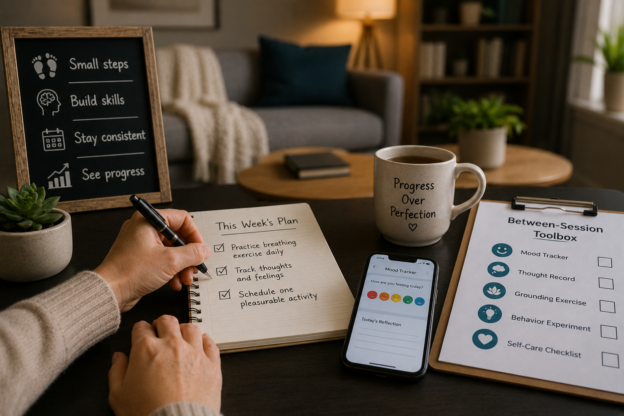
Cozy therapy session with self-care tools

How do I keep counseling clients engaged between sessions?

Keeping counseling clients engaged between sessions boosts progress, strengthens the therapeutic relationship, and helps clients apply what they learn in real life. Engagement between sessions doesn’t mean constant contact or homework overload. It means providing practical, respectful, evidence-informed tools and activities that fit each client’s needs and capacity. This guide gives clear, user-friendly strategies counselors can use to keep clients motivated, on track, and supported between meetings.

Why between-session engagement matters

  • Reinforces learning: Skills practiced between sessions transfer into daily life, making therapy more effective.
  • Increases retention and progress: Regular small steps maintain momentum and reduce dropouts.
  • Strengthens agency: Clients who practice between sessions feel more in control and see tangible benefits.
  • Allows real-world testing: Clients try interventions in the situations where they need change most, giving useful material for the next session.

Principles to guide what you ask clients to do

  • Keep it brief and specific. Short, achievable tasks are more likely to be completed.
  • Collaborate. Co-create tasks with clients so they feel ownership.
  • Tailor to the client’s life. Consider routines, energy, literacy, and access to technology.
  • Make it skill-building not busywork. Every between-session activity should teach or strengthen a clear therapeutic skill.
  • Normalize variability. Track progress without shaming missed practice; use lapses as data for problem solving.
  • Use technology wisely. Digital tools can help, but only when matched to client preference and privacy needs.

Practical strategies to increase engagement

  1. Collaborative, micro-goals
  • What to do: At the end of a session, set one or two micro-goals: small, measurable actions the client can realistically do before the next meeting.
  • Examples: “Try one breathing exercise when you feel stressed” or “Write down three observations of a trigger this week.”
  • Why it works: Micro-goals lower activation energy and create quick wins that build confidence.
  1. Brief, personalized homework
  • What to do: Give short, tailored exercises tied directly to session content.
  • Examples: Thought records with just one entry per day; a 5-minute exposure step; a short behavioral activation checklist.
  • How to structure: Limit to 1–3 items. Include clear instructions, estimated time, and rationale.
  • Track completion: Use simple scoring (e.g., 0–2 scale) to learn what works and adjust.
  1. Between-session worksheets and templates
  • What to do: Provide ready-to-use worksheets for common skills: mood logs, cognitive restructuring prompts, grounding scripts, or activity planners.
  • Tips: Keep wording plain, use large fonts, and include examples. Offer digital and printable formats.
  • How to use in session: Complete the first item together so the client understands the format.
  1. Brief audio or video tools
  • What to do: Record 1–5 minute guided exercises (breathing, progressive muscle relaxation, short coping self-statements) or recommend short, reputable videos.
  • Delivery options: Secure client portal, encrypted messaging, or email (with informed consent about privacy).
  • Advantages: Clients can follow auditory guidance during stressful moments when reading is hard.
  1. Homework choice menus
  • What to do: Present a menu of 4–6 options and let clients pick the ones they prefer.
  • Why it works: Choice increases motivation and adherence.
  • Example items: Practice a coping skill, track moods, try a behavioral activation task, practice a social interaction script.
  1. Use of technology and apps
  • What to do: Recommend evidence-informed apps for mood tracking, meditation, CBT exercises, or DBT skills.
  • Examples: mood trackers, breathing apps, habit trackers, guided journaling.
  • Safety note: Screen for privacy, cost, and usability. Only suggest apps you’ve reviewed and match to client needs.
  1. Structured check-ins
  • What to do: Agree on brief check-in methods—secure message, 1–2 question SMS, or a quick app update.
  • Frequency: Typically 1–2 brief check-ins between sessions; keep boundaries clear.
  • Content: Simple prompts like “What went well?” or “One barrier you faced?” Use responses to inform the next session.
  • Boundary tip: Clarify that check-ins are for brief updates, not therapy between sessions unless specified in your practice policy.
  1. Behavior experiments and real-world practice
  • What to do: Design experiments where clients test beliefs or skills in small, controlled ways.
  • Example: For social anxiety—initiate one 3-minute conversation; for low mood—schedule one pleasurable activity.
  • How to review: Analyze results collaboratively in the next session.
  1. Reinforcement and positive feedback
  • What to do: Acknowledge small efforts and review progress each session.
  • How: Use specific praise (e.g., “You completed three breathing practices this week—I noticed your wording about how it helped.”)
  • Benefit: Reinforcement builds self-efficacy and encourages future attempts.
  1. Problem-solving missed practice
  • What to do: If homework isn’t done, use nonjudgmental curiosity to explore barriers and collaboratively revise the plan.
  • Helpful questions: “What got in the way?” “What needs to change to make this doable?” “What would be a realistic plan for next week?”
  • Avoid: Punitive language or overemphasis on compliance.
  1. Use of reminders and habit cues
  • What to do: Help clients set simple reminders (alarms, calendar events, sticky notes) and tie new practices to existing routines (habit stacking).
  • Example: “Do three deep breaths after brushing your teeth” or “Check mood tracker with morning coffee.”
  1. Brief journaling prompts
  • What to do: Offer single-question prompts that fit into busy days.
  • Examples: “One thing that went well today,” “One thought that bothered you and evidence for/against it.”
  • Time expectation: 1–5 minutes.
  1. Collaborative session-ending summaries
  • What to do: End sessions with a short summary, 1–2 agreed tasks, and expected outcomes.
  • Why it helps: Clients leave with clarity and a stronger chance of follow-through.
  1. Psychoeducation handouts
  • What to do: Provide concise handouts that explain rationale behind techniques in plain language.
  • Use: Reinforce why practices work and reduce stigma about struggles.
  1. Social support and accountability
  • What to do: With consent, encourage clients to involve supportive friends or family for encouragement (not to replace therapy).
  • Examples: A buddy for exercise, reminders from a partner, or collaborative problem-solving.
  1. Incentives and tracking progress visually
  • What to do: Use simple tracking charts, progress bars, or habit streaks clients update.
  • Benefit: Visual progress increases motivation and helps identify patterns.
  1. Crisis planning and boundaries
  • What to do: Always include a plan for crises and clearly state the limits of between-session contact.
  • Components: Emergency contact info, crisis hotline, what constitutes an urgent vs. non-urgent concern.
  • Why: Keeps clients safe and clarifies expectations.

Practical examples of between-session plans (sample scripts)

  • Anxiety-focused week
    • Session close: Agree on a plan: try a 2-minute grounding exercise once daily, do one 5-minute exposure task, log anxiety before and after each exposure.
    • Deliverable: Client brings one completed exposure log to next session.
  • Depression-focused week
    • Session close: Choose three brief activities from a pleasure/achievement menu; schedule one each day; fill a 3-item mood and activity tracker.
    • Deliverable: Client brings tracker and notes one insight about barriers or triggers.
  • Relationship work
    • Session close: Practice one “I” statement this week in a low-stakes conversation; note what changed and bring one specific example.
    • Deliverable: Role-play the experience and refine communication strategies.

Documentation and measurement

  • Keep it simple: Record the agreed between-session tasks in the client file and note rationale and any accommodations.
  • Use measurable outcomes: Track frequency, duration, or a client-rated usefulness score.
  • Monitor engagement trends: Low engagement across clients might indicate unrealistic homework design or systemic issues (e.g., session pacing).

Ethical and legal considerations

  • Informed consent: Discuss the nature of between-session work, confidentiality for digital tools, and limits to remote contact.
  • Privacy: Choose secure channels and inform clients about risks of non-secure platforms.
  • Cultural sensitivity: Tailor tasks to cultural values and individual beliefs; avoid prescribed activities that conflict with clients’ identity.
  • Competence: Only provide tools and interventions within your scope of training.

When engagement still lags: troubleshooting and next steps

  • Reassess fit: Consider whether the therapeutic approach or pace needs adjusting.
  • Simplify tasks: Reduce goals to a single micro-task.
  • Explore motivation: Use motivational interviewing techniques to link tasks to clients’ values.
  • Strengthen alliance: Spend session time reinforcing the therapeutic relationship and empathizing with barriers.
  • Address practical barriers: Transportation, time, energy, literacy, or tech access may require alternate strategies.
  • Consider adjunct supports: Group therapy, peer support, or case management might help.

Quick checklist for session endings

  • Summarize the session in one sentence.
  • Agree on 1–2 micro-goals with time estimates.
  • Choose preferred format (paper, app, audio).
  • Set a follow-up plan for reviewing results.
  • Confirm crisis and contact information.

Sustainable Process

Between-session engagement should be flexible, collaborative, and respectful of each client’s life. Small, doable actions repeated consistently generate meaningful change. As a counselor, focus on co-creating brief, relevant practices, tracking progress, and responding to barriers without blame. When done well, between-session work turns therapy into a lived, sustainable process that carries healing from the room into everyday life.


Best Way to Handle Clients Who Aren’t Implementing Advice

What’s the Best Way to Handle Clients Who Aren’t Implementing Advice?

Hey there, fellow advisor! You give spot-on advice. Your clients nod eagerly in meetings. Then, nothing changes. Frustrating, right? You’re not alone. Many pros face this daily. Let’s fix it together. We’ll uncover the best ways to handle clients who skip your advice. You’ll keep your sanity and grow your business.

This post dives deep into real strategies. You’ll learn why clients resist. You’ll get practical steps to turn things around. Imagine happier clients and better results. Ready? Let’s jump in.


Understand Why They’re Ignoring Your Advice

First, figure out the root cause. Clients aren’t dumb. They have reasons for not acting. You need to uncover them.

  • Start with empathy. Ask yourself: Do they trust you fully? Maybe past advice flopped. Or life got busy. People search Google for “clients not following advice.” Top results stress communication gaps. You’re in good company.
  • Dig deeper. Schedule a casual check-in. Say, “Hey, what’s holding you back from that strategy?” Listen without judging. Often, it’s fear. Fear of change or failure. Or budget issues. You uncover these blocks fast.
  • Common reasons pop up often. They doubt results. Implementation feels overwhelming. Or they forget. Track patterns in your clients. Tailor your approach.
  • Use simple tools. Send quick polls via email. “On a scale of 1-10, how clear was my advice?” Low scores signal confusion. High ones mean other issues. You’ll pinpoint problems easily.
  • Remember, you’re the guide. Not the boss. Clients own decisions. But you influence them. Understanding builds that bridge.
  • Shift your mindset. View resistance as feedback. Not failure. You’ll handle it better. Clients feel your support. They open up more.

Communicate Smarter, Not Harder

Now, boost your communication game. Clear talk prevents most issues. You want clients acting on your words.

  • Break advice into bites. Long plans scare people. Use bullet points. Number steps 1 to 5. Say, “Do this first. Then this.” You’ll see follow-through jump.
  • Make it visual. Share screen recordings. Or infographics. People remember pictures. Not walls of text. Tools like Canva help you create them quick.
  • Follow up gently. Don’t nag. Send a friendly nudge. “How’s that tip working? Need tweaks?” Weekly texts build habits. Clients appreciate reminders.
  • Use stories. Share success tales. “One client did this. Sales doubled in a month.” Proof motivates. You make advice real.
  • Address objections upfront. Ask, “What worries you about this?” Then counter kindly. “Many fear costs. But it pays off fast.” You’ll disarm doubts.
  • Set expectations early. Say, “Results take time. Stick with it for 90 days.” Clients commit better. You reduce drop-offs.
  • Personalize it. Know their goals. Tie advice to them. “This boosts your revenue goal.” Relevance sticks.
  • Track progress together. Monthly calls review wins. Celebrate small steps. “Great job on step one!” Momentum builds.
  • You’re building partnership. Not dictatorship. Clients implement when they feel heard. Your bond strengthens.

Make Implementation Dead Simple

Tired of excuses? Simplify everything. Clients act when it’s easy. You remove barriers.

  • Create templates. Ready-to-use docs. Fill-in-the-blanks style. No thinking required. They love it.
  • Offer checklists. “Week 1: Do these three things.” Tick boxes feel rewarding. Completion rates soar.
  • Automate where possible. Share Zapier links. Or plug-and-play tools. “Click here to set up.” Done in minutes.
  • Bundle services. Include setup help. “I’ll do the first one. You watch.” Hands-on learning works wonders.
  • Time it right. Suggest micro-actions. “Spend 10 minutes today.” Small wins lead to big changes.
  • Gamify it. “Hit these milestones. Get a bonus call.” Fun keeps them engaged. You spark motivation.
  • Provide resources. Free guides or videos. “Watch this 2-minute clip.” Barriers vanish.
  • Test for friction. Ask, “What’s the hardest part?” Fix it fast. You’ll streamline perfectly.
  • You’re the simplifier. Clients thank you later. Results prove your value.

Follow Up Without Being Pushy

Follow-ups seal the deal. Do them right. You stay top of mind.

  • Time them smart. Day 3, week 1, month 1. Predictable rhythm works.
  • Vary methods. Email, text, call. Mix keeps it fresh. No one ignores variety.
  • Be specific. “Did you try the email template? Thoughts?” Vague asks get ignored.
  • Offer value always. Share a new tip. “Bonus: This pairs well.” Not just checking boxes.
  • Use accountability partners. “Share updates with your team.” Peer pressure helps.
  • Silent period? Reach out warmly. “Missed you! Everything okay?” Reconnects gently.
  • Document wins. “Last month, you implemented X. Revenue up 15%!” Proof inspires more action.
  • Know when to pause. Some clients need space. Respect it. Return later.
  • You’re persistent yet kind. Clients respect boundaries. Loyalty grows.

Handle Chronic Non-Implementers Gracefully

Some clients never change. Face it head-on. You protect your energy.

  • Spot red flags early. Endless questions. No action. Bail signals.
  • Have the talk. “I’ve noticed advice isn’t sticking. What’s up?” Honest chat clarifies.
  • Propose alternatives. “Want hands-on help? Or simpler plans?” Meet them halfway.
  • Set boundaries. “Free advice ends after three nudges. Paid support next.” Value your time.
  • Fire gracefully. “Our styles don’t match. Best wishes!” Refer others. Frees you up.
  • Learn from them. What could improve? Tweak your process.
  • Focus on stars. Clients who act bring referrals. Joy multiplies.
  • You’re selective now. Quality over quantity. Business thrives.

Turn Resistance into Loyalty Long-Term

Great handling builds superfans. You create raving clients.

  • Review quarterly. “What worked? What didn’t?” Co-create better plans.
  • Reward action. Discounts for implementers. “Loyalty perk!” Incentives rock.
  • Build community. Group calls share tips. Peer learning motivates.
  • Upsell naturally. “Ready for advanced? You’ve nailed basics.” Growth feels earned.
  • Measure success. Track metrics together. “Advice led to 20% growth!” Tangible wins bond you.
  • Share testimonials. “See what others achieved?” Social proof sways.
  • You’re transforming advisors. Clients stick because you care.
  • Challenges persist. Adapt always. Stay light-hearted. Laugh off flops.

Empower Yourself as the Advisor

Finally, level up you. Strong advisors handle this best.

  • Invest in skills. Read “The Advisor’s Guide.” Or sales psych books.
  • Join communities. Reddit’s r/consulting shares war stories. You’re not alone.
  • Track your wins. Journal successes. Confidence soars.
  • Self-care matters. Walks clear your head. Frustration fades.
  • You’re the expert. Own it. Clients follow leaders.
  • This approach works. Clients implement. Your impact grows.
  • Implement these today. Watch magic happen. You’ve got this!
How Do I Guide Clients in Creating Content That Converts

How Do I Guide Clients in Creating Content That Converts?

Creating content that truly converts isn’t a mystery, but it’s definitely a skill you can guide your clients to master with the right approach. When you help your clients understand how to craft content that not only attracts attention but also persuades people to take action, you’re paving the way for their success and yours. So, how do you do that? Here’s a clear, practical guide that you can use to help your clients create content that actually turns browsers into buyers.


Understanding What Conversion Means for Your Client

First, you need to clarify what conversion looks like for your client. Conversion can mean different things depending on their business goals. It might be signing up for a newsletter, making a purchase, booking a consultation, or downloading a resource. When your client defines their specific conversion goal, you can tailor content strategies to meet that exact need.

Encourage your clients to think about their audience’s mindset and what action they want them to take after reading the content. The clearer they are about their audience’s next step, the more focused the content can be. So, start every project by getting this simple but crucial detail locked down.


Helping Clients Know Their Audience Inside and Out

Content that converts speaks directly to the reader’s needs and desires. You should guide your clients to deeply understand who their audience really is. What problems are these potential customers facing? What questions do they ask? What language do they use? The more your clients know about their audience, the better they can address those pain points and craft persuasive messages.

Suggest that your clients create audience personas—a sort of detailed profile of their ideal customer including demographics, interests, challenges, and behavior. This exercise helps in creating content that feels personal and relevant, which naturally boosts conversions.


Structuring Content to Lead Readers to Action

Once your client has a clear conversion goal and understands their audience, you can help them shape content that guides readers step by step toward taking action. Content that converts has a natural flow that pulls readers in, keeps them interested, and gently nudges them toward the next step.

Start by helping your client craft a strong, attention-grabbing headline. The headline should promise a benefit or solve a problem, so people want to read more. Then, guide them in making the introduction clear and relatable, outlining what the reader will get from the content.

Next, the body of the content should focus on delivering real value through helpful information, examples, or solutions. Avoid overwhelming readers with too much jargon or unnecessary fluff. Instead, aim for clear, concise sentences that hold attention and build trust.

Finally, every piece needs a powerful call-to-action (CTA). Teach your clients to always end with a CTA that tells readers exactly what to do next, whether it’s signing up, contacting, or buying. This direct approach encourages action and increases conversions.


Tips for Guiding Clients in Writing Engaging Content

Writing style plays a huge role in conversion. Make sure your clients know to write as if they’re talking to a friend. This tone keeps things light and easy to read. Using “you” instead of “we” or “they” puts the reader in focus, making the content more persuasive.

Encourage your clients to use simple words and short sentences whenever possible. Long, complicated sentences can lose readers quickly. Also, using bullet points or numbered lists breaks up the text and makes it easier to scan.

Suggest including stories or examples to make the content relatable. People connect with real-life situations, and this emotional engagement makes them more likely to respond.


Incorporating SEO Without Losing Conversion Focus

While helping clients optimize content for search engines, remind them that the ultimate goal remains conversion. Keywords are important, but they shouldn’t sacrifice readability or the natural flow of content. Suggest weaving keywords naturally into the headline, introduction, and body.

Also, advise your clients to include internal links to other helpful pages and external links to authoritative resources. These links build credibility and keep people exploring their site, which can lead to better conversion opportunities.


Tracking and Adjusting Content Strategy

Conversion doesn’t end when the content goes live. Help your clients understand the importance of tracking how the content performs. Tools like Google Analytics or heatmaps show which pages attract visitors and where they drop off.

Encourage your clients to review data regularly and tweak their content based on results. Maybe headlines need to be stronger, CTAs clearer, or the content more focused on pain points. Continuous improvement is key to creating content that converts better every time.


Turning Strategy into Success

Guiding clients in creating content that converts means getting crystal clear on their goals, knowing their audience intimately, structuring content to lead readers naturally to action, and tracking results for constant improvement. Encourage clients to keep their language simple and friendly, focus on the reader’s needs, and include strong calls-to-action. With patience and practice, you’ll help your clients create content that doesn’t just get read but gets results.

What’s The Best Way To Coach Clients Through a Website Redesign

What’s The Best Way To Coach Clients Through a Website Redesign?

Redesigning a client’s website can feel like a big project, but with the right approach, you can make the process smooth, effective, and even enjoyable for both of you. The best way to coach clients through a website redesign is to guide them step-by-step by setting clear expectations, keeping communication open, and focusing on their business goals throughout. Here’s a simple, clear plan to help you coach your clients successfully through a website redesign.

1. Start With Clear Discovery and Goal Setting

You can’t create a great website without understanding what your client really needs. Begin by having an open conversation to discover their business goals, target audience, and what they want the new website to achieve. Ask questions like:

  • What do you want your website to do? (Attract leads, sell services, educate visitors?)
  • Who is your ideal visitor or client?
  • What do you like or dislike about your current website?
  • Are there websites you admire and why?
  • What specific features or content must be included?

Write down these goals clearly, so you both have a shared vision. This will keep the project on track and focused on what truly matters. By starting this way, you avoid unnecessary design changes and confusion later.

2. Educate on the Website Redesign Process and Timeline

Many clients don’t understand how complex website redesigns can be. It helps to explain the process in simple terms, so they know what to expect and when. Break the redesign into phases like:

  • Research and discovery
  • Sitemap and wireframe creation
  • Design mockups
  • Development and testing
  • Launch and post-launch support

Share a realistic timeline with milestones. Make sure they understand that good websites take time, and rushing can hurt results. Let them know there will be review points where they provide feedback. This keeps them involved, so they feel ownership but also know when decisions need to be final.

3. Focus on User Experience and Clear Messaging

Remind your client the website isn’t just about looking pretty – it needs to work for their visitors. Coaching them on creating clear, simple, and compelling content is key. Help them:

  • Define a strong, clear headline on each page that tells visitors what’s in it for them
  • Use easy-to-read language, avoiding jargon
  • Break content into small sections with subheadings for quick reading
  • Use calls-to-action (CTAs) that guide visitors on what to do next (book a session, join a newsletter, contact you)
  • Include testimonials or success stories that build trust

Also, explain the importance of usability: fast loading, mobile-friendly, and easy navigation. A confused visitor won’t stick around, so prioritizing user experience will lead to better results.

4. Keep Communication Simple and Frequent

Clients appreciate knowing what’s happening, so check in often with updates and gentle reminders for feedback. Use straightforward language — no tech jargon. Ask questions that make it easy for them to respond. For example:

  • “Do you prefer this photo or that one?”
  • “Is this headline clear to you?”
  • “What do you feel when you visit this page?”

Encourage honesty and reassure them that honest feedback helps make the site better. Avoid overwhelm by sharing small chunks of work rather than everything at once.

5. Prepare Them for Content Creation

New websites need updated content, and many clients get stuck here. Help your client by giving clear instructions and deadlines for providing text, images, and any other materials. Offer content outlines or templates to make their job easier. You can even suggest simple tools or hire a copywriter in advance.

Explain that quality content is a key to their website’s success and won’t improve overnight. Encourage them to think about the questions their clients ask regularly and include answers on the website.

6. Teach the Importance of Testing and Feedback Before Launch

Before the new website goes live, it’s important to test everything on different devices and browsers. Invite your client to explore the site and check if all links work, forms submit properly, and the design looks good on phones and tablets.

Explain how bugs or issues are normal, and fixing them before launch improves user trust and performance. Their feedback during this phase is crucial for final adjustments.

7. Plan for Launch and Beyond

The website launch is just the beginning. Coach your client on post-launch activities like:

  • Monitoring website traffic and visitor behavior with tools like Google Analytics
  • Keeping the site updated with fresh content such as blog posts, videos, or newsletters
  • Regularly reviewing SEO basics: page speed, meta descriptions, keywords

Remind them that websites are living tools that evolve with their business, so ongoing maintenance and updates are needed to keep growing their audience.


Final Tips for Coaching Clients Through a Website Redesign

  • Stay patient and positive: Website redesigns can be stressful for clients. Your calm guidance matters.
  • Use visuals: Show examples, wireframes, or mood boards to help them visualize ideas.
  • Set boundaries: Clarify how many revisions are included and what counts as new work.
  • Celebrate milestones: Acknowledge progress to keep motivation high.
  • Provide resources: Share helpful guides or video tutorials for content creation or managing their new site.

By following these steps, you help your client feel supported and confident throughout the redesign. You turn an often complex project into a clear, manageable process that leads to a website they love and that truly serves their business goals.